

Have you ever received a message with a 😊, ❤️, or 💀 emoji and wondered what the sender really meant? Emojis make texting more expressive, but their meanings can sometimes be confusing.
A smiley face might show happiness, friendliness, or even sarcasm, depending on the conversation.
Similarly, a heart emoji can express love, appreciation, or friendship. Understanding emoji meaning helps you interpret messages more accurately and choose the right emojis for your own conversations.
Whether you’re chatting with friends, texting your crush, or posting on social media, learning how emojis work can make your digital communication easier, clearer, and more fun.
Quick Answer:
Emoji meaning refers to the emotion, idea, reaction, or message represented by a small digital picture. Emojis are a friendly, expressive way to communicate feelings and add context to text messages.
What Does Emoji Meaning Mean in Text?
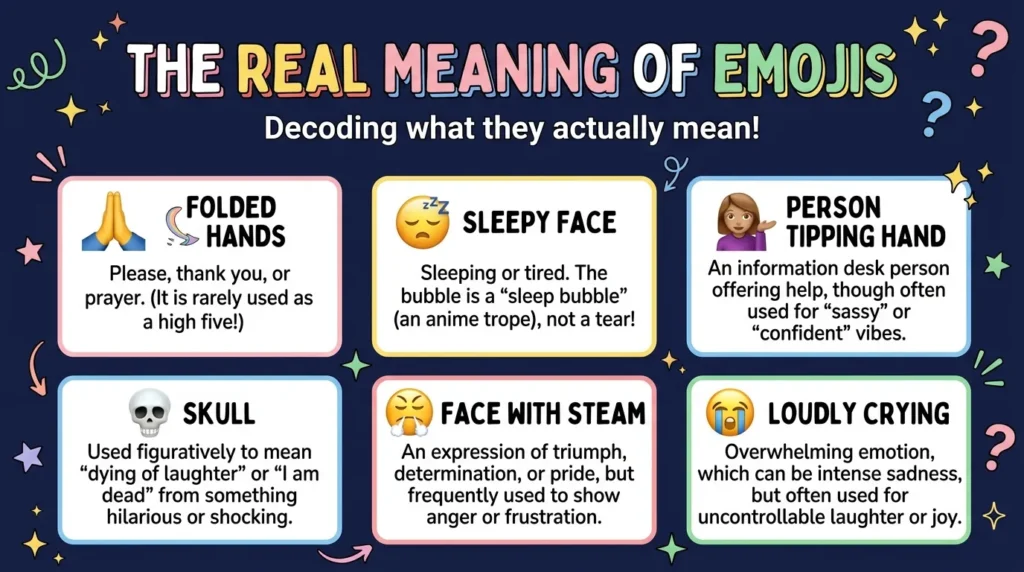
Emoji meaning refers to what an emoji represents when someone uses it in a text message, social media post, comment, or online conversation. Emojis are small digital symbols that can express emotions, activities, objects, reactions, and ideas without requiring a long explanation.
For example, the 😊 emoji commonly represents happiness, warmth, or friendliness, while the 😂 emoji usually expresses laughter or amusement. The ❤️ emoji often symbolizes love, affection, or appreciation.
However, an emoji’s meaning can change depending on the conversation, the relationship between the people chatting, and the sender’s intention. A 🙂 emoji may communicate a simple smile in one conversation but feel passive-aggressive in another.
Here are some popular emojis and their common meanings:
- 😊 Smiling Face: Happiness, friendliness, or warmth.
- 😂 Face with Tears of Joy: Laughter or something extremely funny.
- ❤️ Red Heart: Love, affection, or appreciation.
- 😭 Loudly Crying Face: Sadness, overwhelming emotion, or exaggerated laughter.
- 😍 Heart Eyes: Admiration, attraction, or excitement.
- 💀 Skull: Often used online to mean something is extremely funny or shocking.
- 🙏 Folded Hands: Prayer, gratitude, or a polite request.
- 🔥 Fire: Something exciting, impressive, attractive, or excellent.
- 👀 Eyes: Curiosity, interest, suspicion, or anticipation.
- 🥹 Face Holding Back Tears: Feeling touched, grateful, emotional, or overwhelmed.
For example:
A: i got the job!! 🎉
B: omg congratulations!! 🥹❤️
In this conversation, the emojis express excitement, happiness, and emotional support.
In short: Emoji meaning = the message or emotion represented by an emoji = a visual way to express feelings and ideas in digital communication.
Where Is Emoji Meaning Commonly Used?
Emojis are widely used in everyday digital communication. They help people express emotions, add personality to messages, and make conversations feel more natural.
Here are some common places where emojis appear:
- 📱 Text Messages: People use emojis to express happiness, sadness, love, excitement, and other emotions when chatting with friends and family.
- 👻 Snapchat: Emojis can appear in messages, stories, and friend indicators. Some Snapchat emojis also have platform-specific meanings.
- 🎵 TikTok: Users add emojis to captions, comments, and videos to communicate reactions, trends, and humor.
- 📸 Instagram: Emojis are popular in direct messages, comments, captions, and profile bios.
- 💬 WhatsApp and Messenger: People use emojis to react to messages, express affection, and make conversations more engaging.
- 🎮 Gaming Chats: Gamers use emojis to celebrate wins, express frustration, or react to funny moments.
- 💼 Workplace Chats: Emojis can communicate appreciation, friendliness, and positive reactions, depending on the workplace culture.
- ❤️ Romantic Conversations: Hearts, winks, blushing faces, and kiss emojis can express affection or playful interest.
Emojis are generally casual and social-media-friendly. They can also work in professional communication when used appropriately, but formal emails and serious business messages may require a more restrained approach.
Keep in mind that some emojis have special meanings on particular platforms. For example, Snapchat uses certain emojis as indicators of friendship interactions, while the same symbols may simply express emotions in an ordinary text message.
Examples of Emoji Meaning in Conversation
Here are seven realistic examples showing how emojis communicate different feelings in everyday chats.
1. Expressing Happiness
A: i passed my driving test!! 🚗
B: yesss!! so happy for you 😊🎉
Meaning: The emojis communicate happiness, encouragement, and celebration.
2. Showing Romantic Interest
A: you looked amazing today 😉
B: aww, you’re making me blush 😍❤️
Meaning: The emojis express attraction, affection, and playful flirting.
3. Reacting to Something Funny
A: i walked into the wrong classroom and sat there for 10 minutes 💀
B: STOPPP I’M CRYING 😂😭
Meaning: The emojis indicate that the situation is extremely funny.
4. Showing Appreciation
A: thanks for helping me with everything today
B: anytime!! ❤️🙏
Meaning: The heart and folded hands express affection, gratitude, or appreciation.
5. Expressing Sadness
A: my best friend is moving away tomorrow 😭
B: i’m so sorry, that’s really hard 🥺
Meaning: The emojis communicate sadness and sympathy.
6. Showing Curiosity
A: guess who texted me last night 👀
B: WAIT WHO?? tell me everything 😂
Meaning: The eyes emoji shows curiosity and anticipation.
7. Celebrating an Achievement
A: finally finished my first 5k run 🏃
B: THAT’S AMAZING!! 🔥👏
Meaning: The fire and clapping emojis express excitement, praise, and encouragement.
These examples show that emojis can add emotional context to ordinary words. However, they do not always communicate the same thing to everyone, so consider the conversation before interpreting an emoji too literally.
When to Use and When Not to Use Emojis
Emojis can make your messages warmer and easier to understand, but choosing the right symbol matters.
✅ When to Use Emojis
- In friendly conversations: Add a smiley face or laughing emoji to make messages feel warm and relaxed.
- When expressing emotions: Use hearts, happy faces, or sad faces to communicate feelings more naturally.
- When celebrating good news: 🎉, 🥳, and 👏 can make congratulations more enthusiastic.
- When flirting casually: 😉, 😍, and ❤️ may communicate playful or romantic interest when appropriate.
- On social media: Emojis can make captions, comments, and posts more expressive.
- When showing appreciation: ❤️, 🙏, and 🫶 can communicate gratitude and affection.
❌ When Not to Use Emojis
- In formal documents: Avoid unnecessary emojis in official reports, applications, and formal correspondence.
- During serious conversations: A laughing emoji may seem insensitive when someone is sharing difficult news.
- When clarity is essential: Explain important instructions in words rather than relying on symbols alone.
- In unfamiliar professional relationships: Too many emojis may seem overly casual.
- When the meaning could be misunderstood: Choose clear words if an emoji could create confusion.
Emoji Use in Different Contexts
| Context | Example Phrase | Why It Works |
|---|---|---|
| Friend Chat | that was so funny 😂 | Casual and expressive |
| Romantic Chat | miss you ❤️ | Warm and affectionate |
| Work Chat | Great work on the presentation! 👏 | Positive and encouraging |
| Formal Email | Thank you for your assistance. | Clear and professional |
| Serious Conversation | I’m here if you need to talk. | Supportive and respectful |
The best approach is to match your emoji use to the situation and the person receiving your message.
Similar Slang Words or Alternatives
Emojis are not the only way to express feelings online. People also use texting abbreviations, slang, and written reactions to communicate quickly.
| Slang or Alternative | Meaning | When to Use |
|---|---|---|
| LOL | Laughing Out Loud | Reacting to something funny |
| LMAO | Laughing My Ass Off | Expressing strong amusement casually |
| ILY | I Love You | Showing affection |
| OMG | Oh My God | Expressing surprise or excitement |
| Aww | A reaction to something sweet or touching | Responding to cute or emotional messages |
| Haha | Written laughter | Keeping casual conversations friendly |
These alternatives can work alongside emojis or replace them entirely.
For example, you could write that’s hilarious 😂 or that’s hilarious lol. Both communicate amusement, but the emoji adds a visual expression while LOL uses an abbreviation.
Likewise, ILY ❤️ combines a short expression of love with a heart symbol, making the message more affectionate.
Remember that abbreviations and emojis depend on context, too. LOL can sometimes soften an awkward message, while ILY may feel intimate depending on the relationship.
FAQs About Emoji Meaning
1. What does emoji meaning mean?
Emoji meaning refers to the emotion, idea, object, or reaction represented by an emoji in digital communication.
2. Why do people use emojis in text messages?
People use emojis to express emotions, clarify tone, show reactions, and make conversations more engaging.
3. What does ❤️ mean in text?
The red heart commonly represents love, affection, appreciation, or emotional closeness. Its meaning depends on the relationship and context.
4. What does 😊 mean in texting?
The smiling face with smiling eyes usually expresses happiness, warmth, friendliness, or a kind response.
5. Can emojis have different meanings?
Yes. An emoji may communicate different emotions depending on the conversation, culture, platform, and relationship between the sender and recipient.
6. Are emojis appropriate for professional messages?
Yes, in some workplaces and informal professional chats. However, formal emails and sensitive communications usually benefit from limited emoji use.
7. What does 💀 mean in texting?
The skull emoji often means something is extremely funny, shocking, or embarrassing in online slang. It does not necessarily refer to death.
8. How can I understand an emoji correctly?
Read the surrounding message, consider your relationship with the sender, and pay attention to the conversation’s tone. Ask for clarification if necessary.
9. Do emojis mean the same thing on every platform?
Not always. Some platforms assign special meanings to emojis, and their visual designs can vary between devices.
10. Where can I find emoji meanings?
You can explore emoji dictionaries, Unicode emoji descriptions, and reliable texting guides to understand common symbols and their uses.
Understanding emoji meaning helps you communicate more confidently in texts, social media comments, and everyday online conversations. Instead of guessing what every symbol means, consider the context and use emojis that express your intended message clearly.
Read more post